
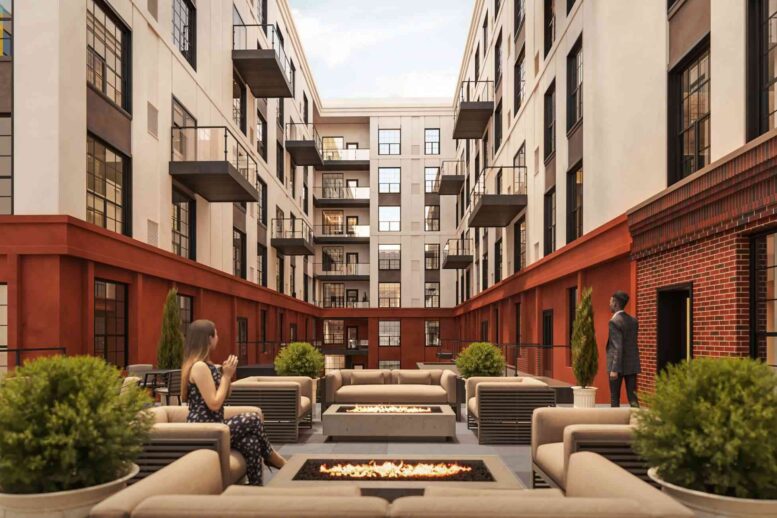
Earlier this month, Philadelphia YIMBY shared details on a new eight-story, 188-unit mixed-use building proposed at 1527 Callowhill Street in Franklintown, Lower North Philadelphia, which is being developed by Omega Home Builders and designed by Designblendz Architecture. Today, we look at the project’s environmental and landscaping features.
The proposed building at 1527 Callowhill Street will feature a compact, 1,200-square-foot deck at the second story in the courtyard, leaving most of the expansive upper roof, and the skyline views it would offer, inaccessible to building residents. On the positive side, however, a green roof will span most of the sizable rooftop, a feature that will benefit the local ecology by creating a bird habitat (if native grasses are planted), mitigate storm flooding by capturing rainfall runoff, decrease the local heat island effect, and lower heating and cooling energy consumption by improving building insulation.
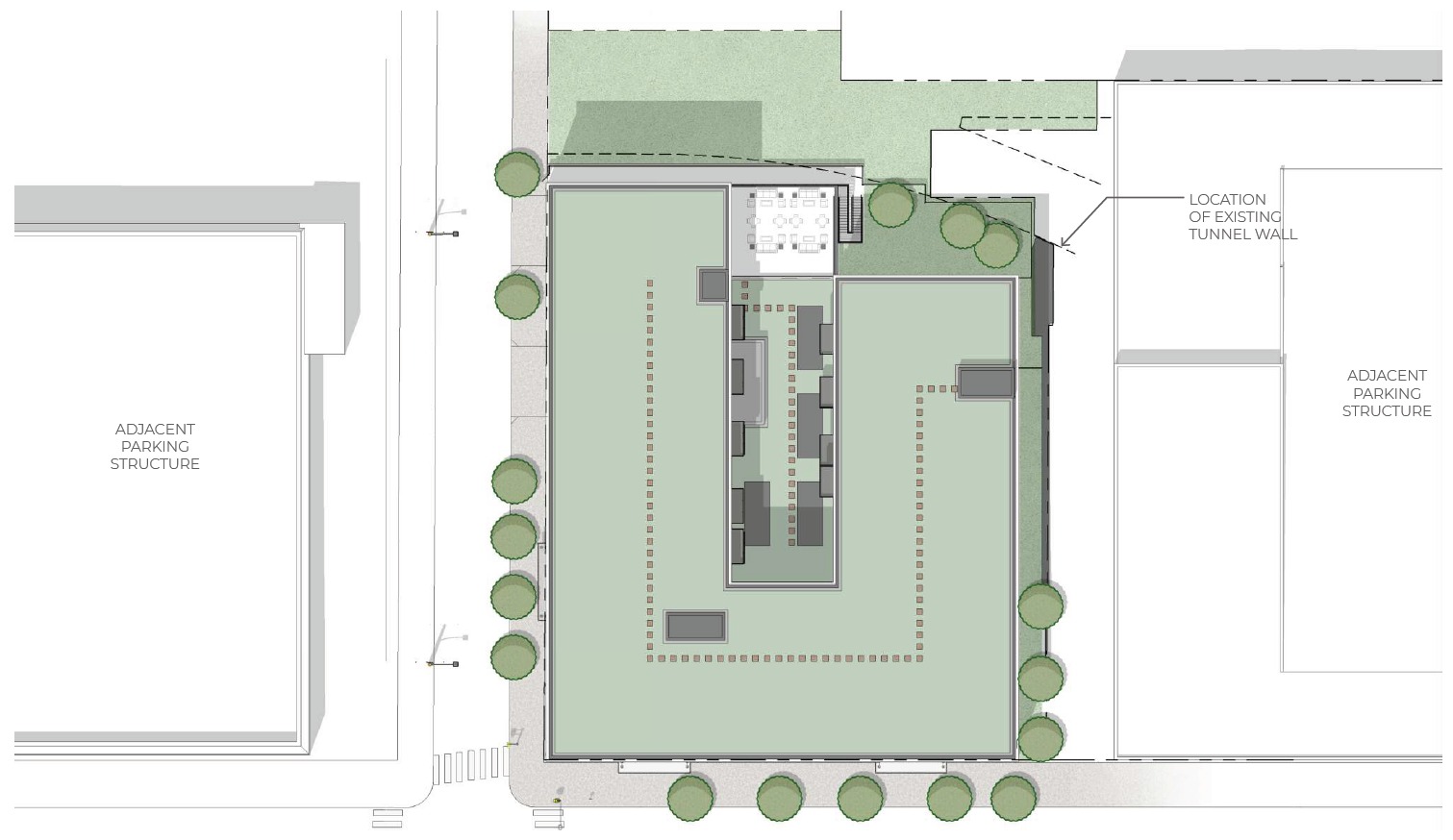
1527 Callowhill Street. Master plan. Credit: Designblendz Architecture via the Civic Design Review by the Philadelphia City Planning Commission and the Department of Planning and Development.
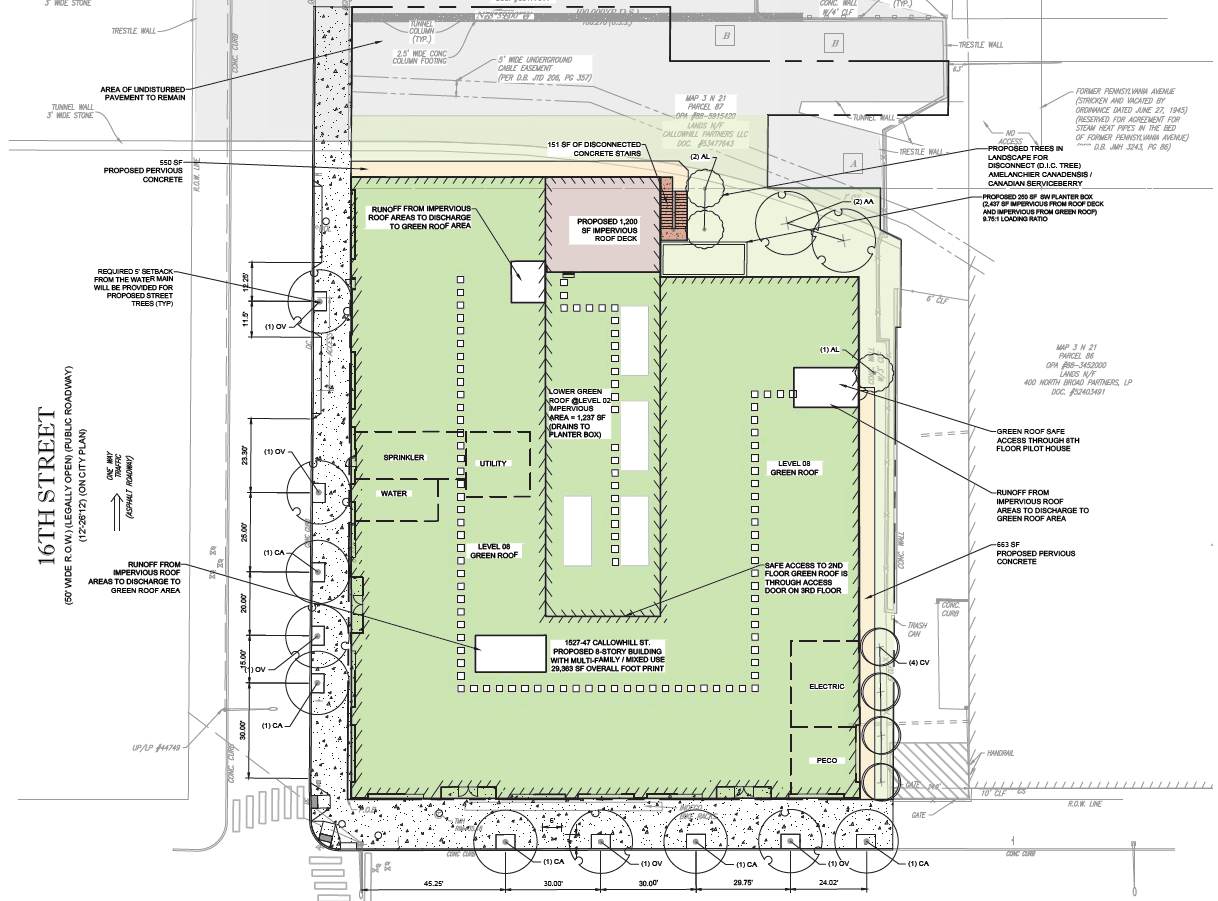
1527 Callowhill Street. Landscaping plan. Credit: Designblendz Architecture via the Civic Design Review by the Philadelphia City Planning Commission and the Department of Planning and Development.
A smaller, 1,237-square-foot green roof will also span the second-floor courtyard, adjacent to the resident amenity deck. Both upper and green roofs will incorporate water-impervious layers that will allow the upper roof to discharge rainfall into three collection areas at the upper roof, while the lower roof will channel runoff into a 250-square-foot planter box situated adjacent to the building at the lot interior.
Pervious concrete walkways in the alleyways behind the building (663 square feet in the eastern alley and 550 square feet in its northern counterpart) will allow rainfall to seep into the soil and discharge into substrate groundwater, making for another relatively minor yet welcome environmentally-friendly feature.
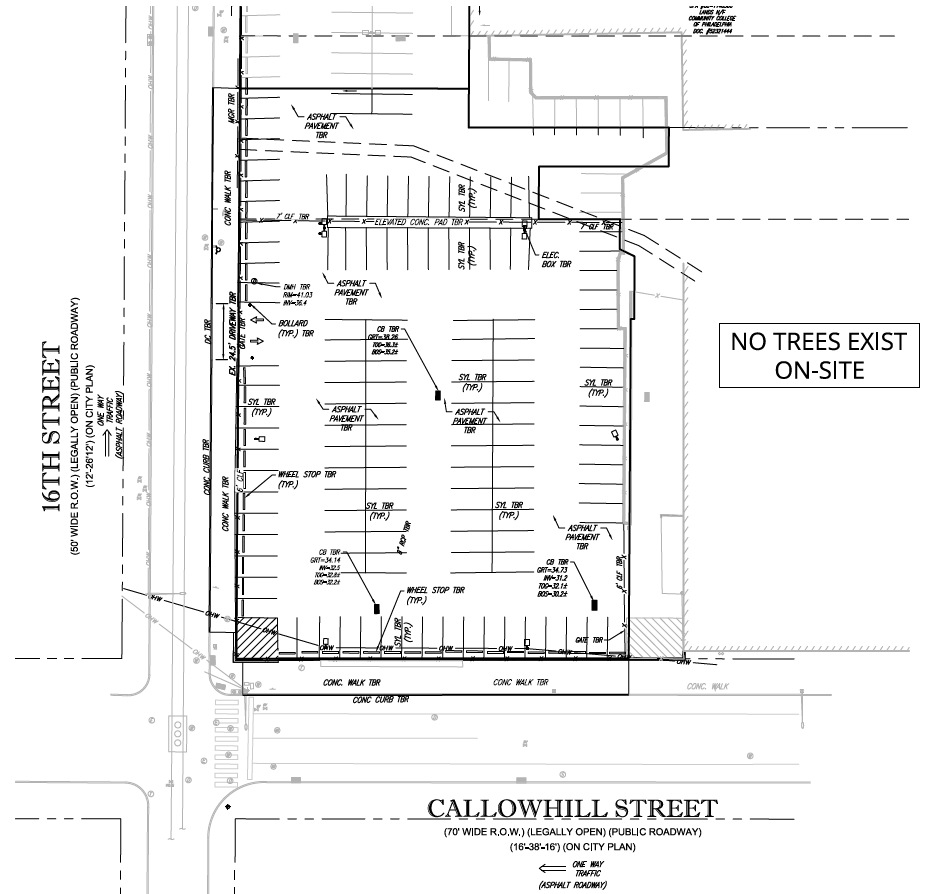
1527 Callowhill Street, Philadelphia. Original townhouse proposal tree removal plan. Credit: Colliers Engineering Design via a zoning permit submitted to the City of Philadelphia.
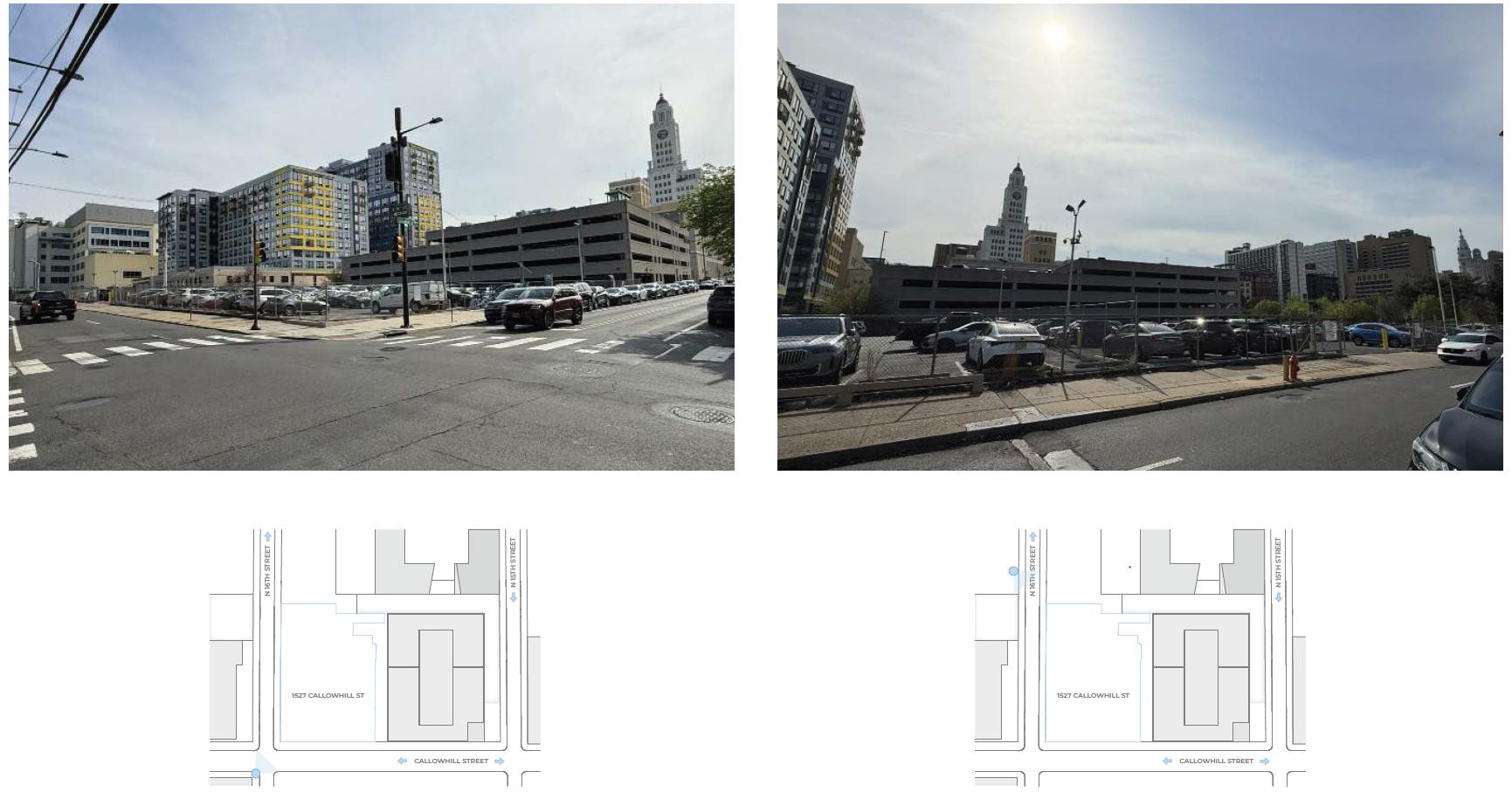
1527 Callowhill Street. Site and urban context photos. Credit: Designblendz Architecture via the Civic Design Review by the Philadelphia City Planning Commission and the Department of Planning and Development.
One of the most significant area improvements associated with the project will stem not from the building itself, but rather from planned curbside landscaping. In its present form, the site is a veritable asphalt desert without a single tree on the parking lot nor along the sidewalk, with no verdure to please the eye nor shade to protect pedestrians from the summertime sun or the city from the heat island effect.
As such, not only will site redevelopment not entail destruction of any existing greenery, but it would also introduce more than a dozen trees along the sidewalk and in building alleyway space, comprised of a delightful mix that includes blossoming species and leaf canopies of various shapes. The planting schedule indicates five American hornbeams (Carpinus caroliniana), five American hophornbeams (Ostrya virginiana), four white fringetrees (Chionanthus virginicus), three Allegheny serviceberries (Amelanchier laevis), and two Armstrong red maples (acer rubrum ‘Armstrong’). Canadian serviceberry (Amelanchier canadensis) trees will be planted at the site interior.
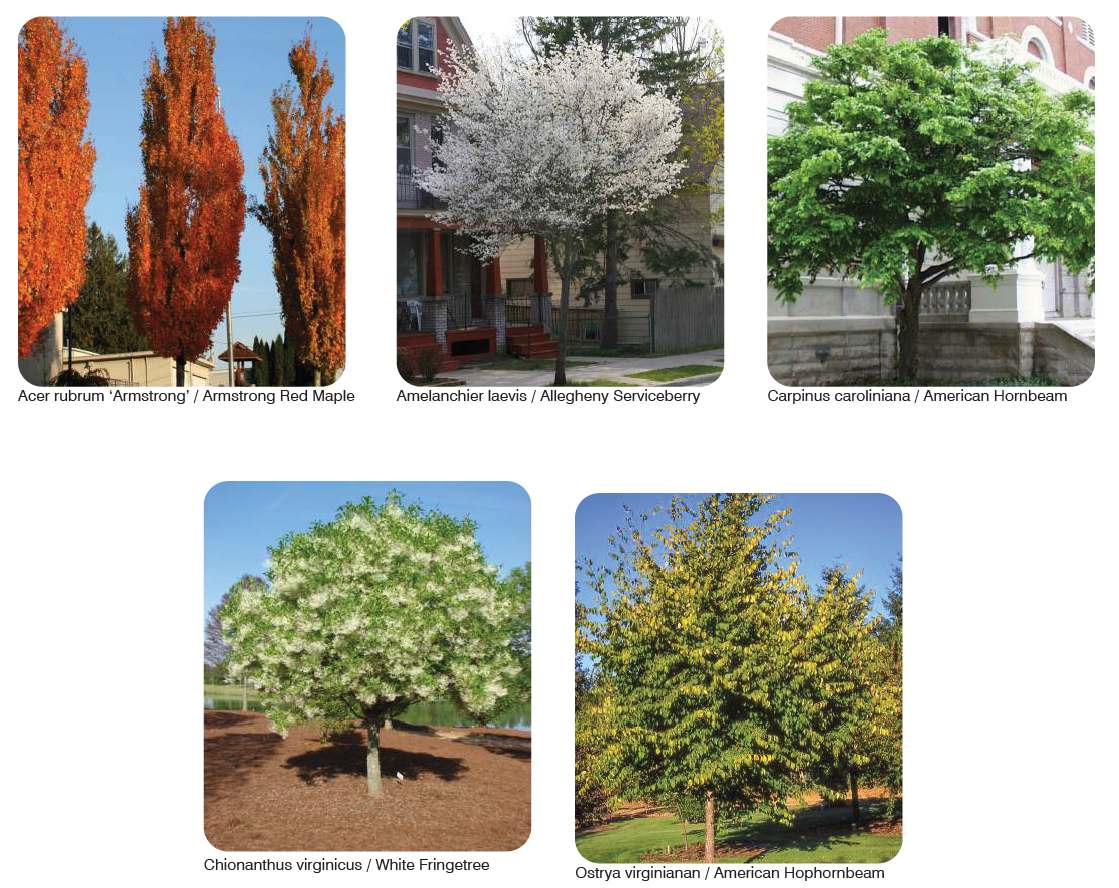
1527 Callowhill Street. Landscaping and planting schedule. Credit: Designblendz Architecture via the Civic Design Review by the Philadelphia City Planning Commission and the Department of Planning and Development.
The American hornbeam is a low-maintenance understory tree notable for its hardiness, musclewood (“muscular-looking”) bark, and dramatic autumnal foliage.
The similarly-named American hophornbeam (alternately spelled as hop hornbeam) is a deciduous medium-sized deciduous Missouri native understory tree with a rounded crown that naturally prefers dry soils on rocky slopes, bluffs, and upland woods. The tree is notable for its birch-like, oval or lance-shaped, sharply-serrated, dark yellowish-green leaves, which turn yellow in autumn and typically drop relatively early in fall and colorful flowers, reddish-brown male flowers and greenish female.
The white fringetree, native to the savannas and lowlands of the northeastern and southeastern United States (the Philly metro area sits near the approximate northern habitat boundary), is a relatively small deciduous tree (it may even be described as a shrub) that blooms with drooping clusters of fragrant, white blossoms and produces grape-like, dark blue fruit clusters.
The Allegheny serviceberry is another compact understory tree that delights the passersby around the year with a distinctive gray bark, early white spring flowers, and orange-red autumn foliage. Many native bird species are attracted to the edible purplish-black fruit in late summer.
The Armstrong Red Maple is a rapidly growing deciduous hybrid between red and silver maples that is notable for its tight, columnar shape. In the fall, it decorates the streetscape with its dazzling orange-red fall leaf coloring.
The Canadian serviceberry (also known as Shadblow service-berry) is notable for its multiple trunk, upright branches, and striking long-petaled white blossoms that open before leaves emerge. Its apple-like fruit small, crimson-colored, edible. In fall, the leaves turn rusty-red or orange.
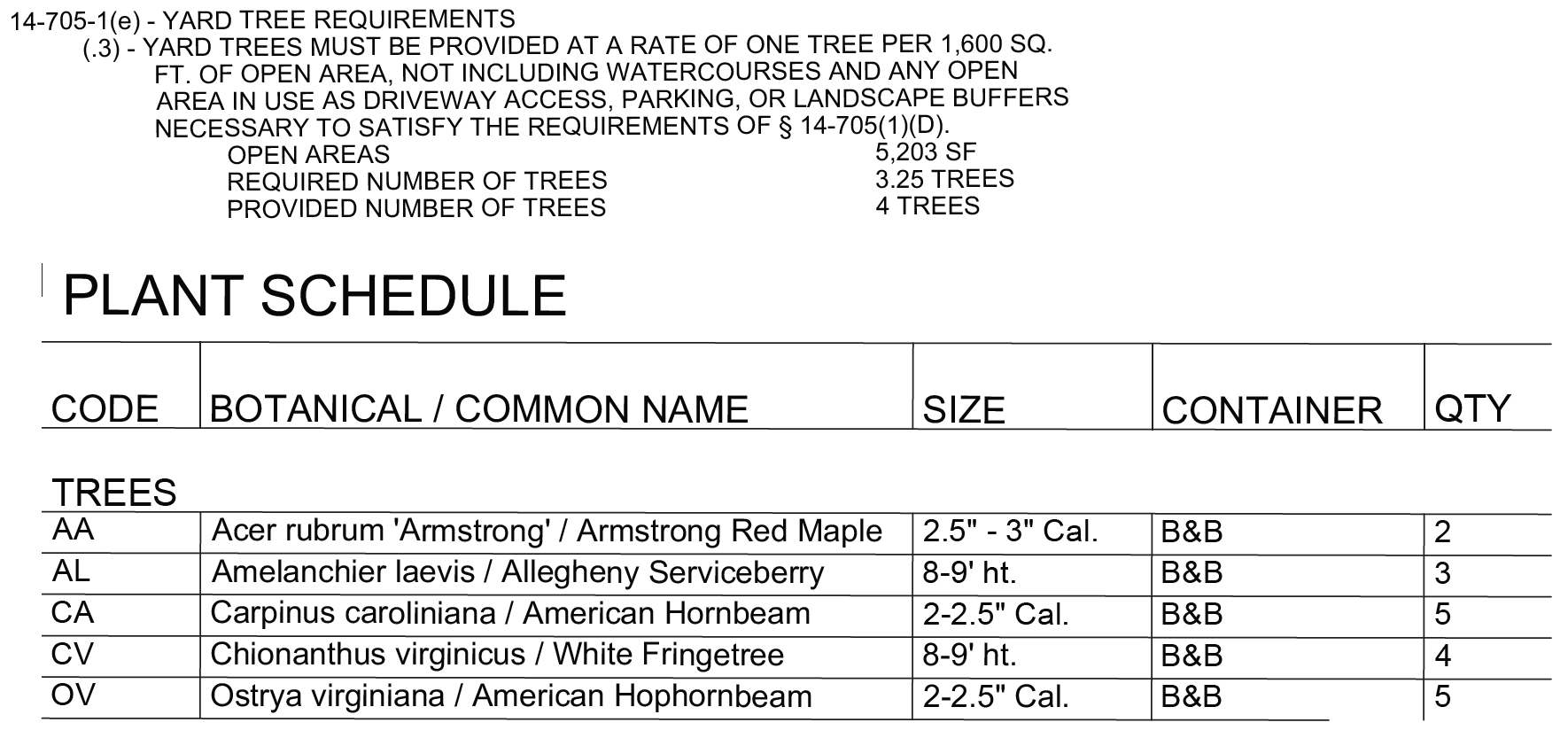
1527 Callowhill Street, Philadelphia. Planting schedule. Credit: Designblendz Architecture via the Civic Design Review by the Philadelphia City Planning Commission and the Department of Planning and Development.
Below is the complete landscaping schedule for the development:
Canopy Trees
Acer rubrum “Red maple”
Quercus alba “White oak”
Understory Trees
Amelanchier gradiflora “Serviceberry”
Chionanthus virginicus “White fringetree”
Crataegus flava “Yellowleaf hawthorn”
Halesia tetraptera “Carolina silverbell”
Evergreen Trees
Ilex opaca “American Holly”
Magnolia virginiana “Sweetbay Magnolia”
Shrubs
Aronia arbutifolia “Red chokeberry”
Clethra alnifolia “Sweet pepperbush”
Fothergilla gardeni “Dwarf fothergilla”
Hydrangea quercifolia “Oakleaf hydrangea”
Perennials
Agastache ‘blue fortune’ “Anise hyssop”
Allium cernuum “Nodding onion”
Echinacea purpurea “Purple coneflower”
Eriophyllum lanatum “Wooly sunflower”
Solidago speciosa “Showy goldenrod”
Symphyotrichum oblongifolium “‘October skies’ aromatic aster”
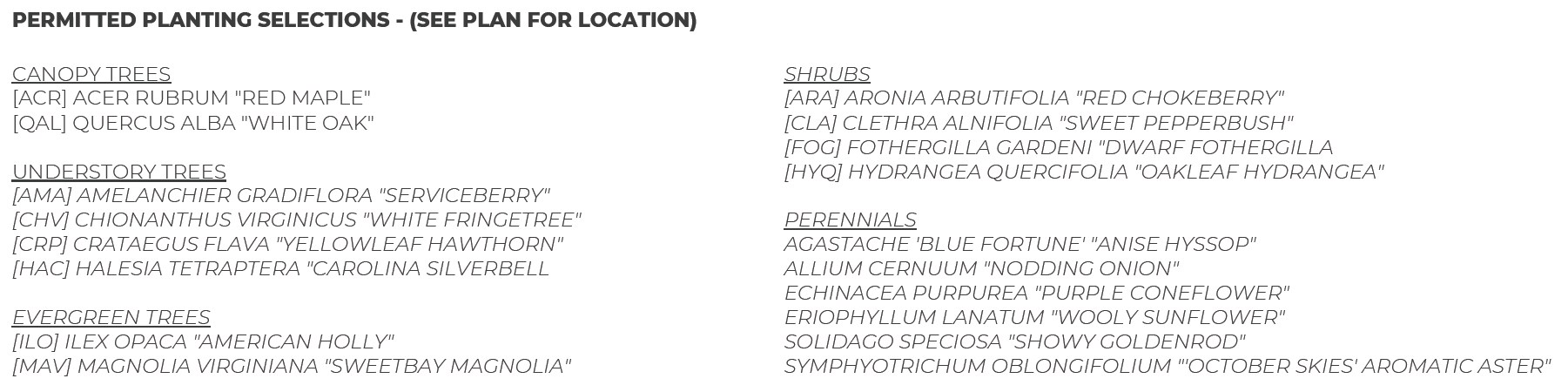
1527 Callowhill Street. Planting schedule. Credit: Designblendz Architecture via the Civic Design Review by the Philadelphia City Planning Commission and the Department of Planning and Development.
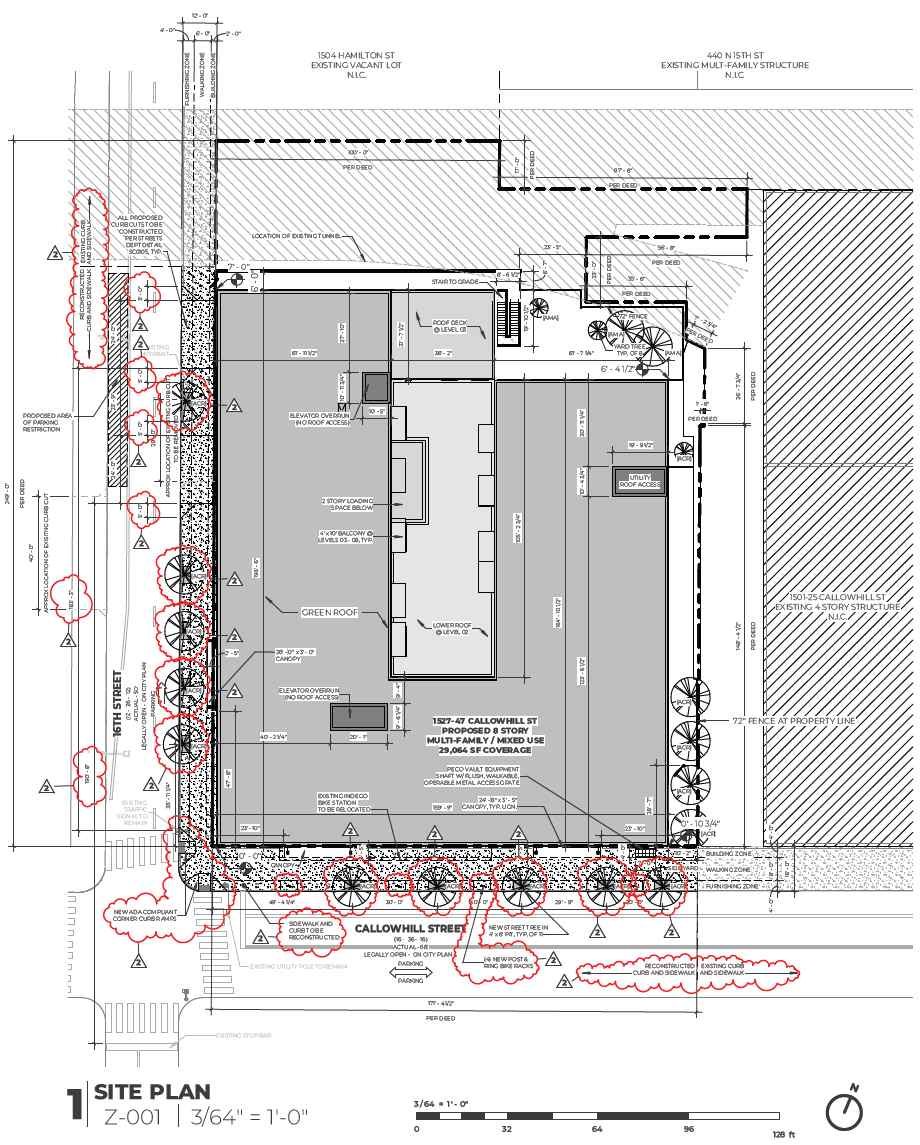
1527 Callowhill Street. Site plan. Credit: Designblendz Architecture via the Civic Design Review by the Philadelphia City Planning Commission and the Department of Planning and Development.
Below is the project’s Sustainable Design Checklist as submitted to the Civic Design Review, which outlines the proposed development’s environmental parameters in greater detail.
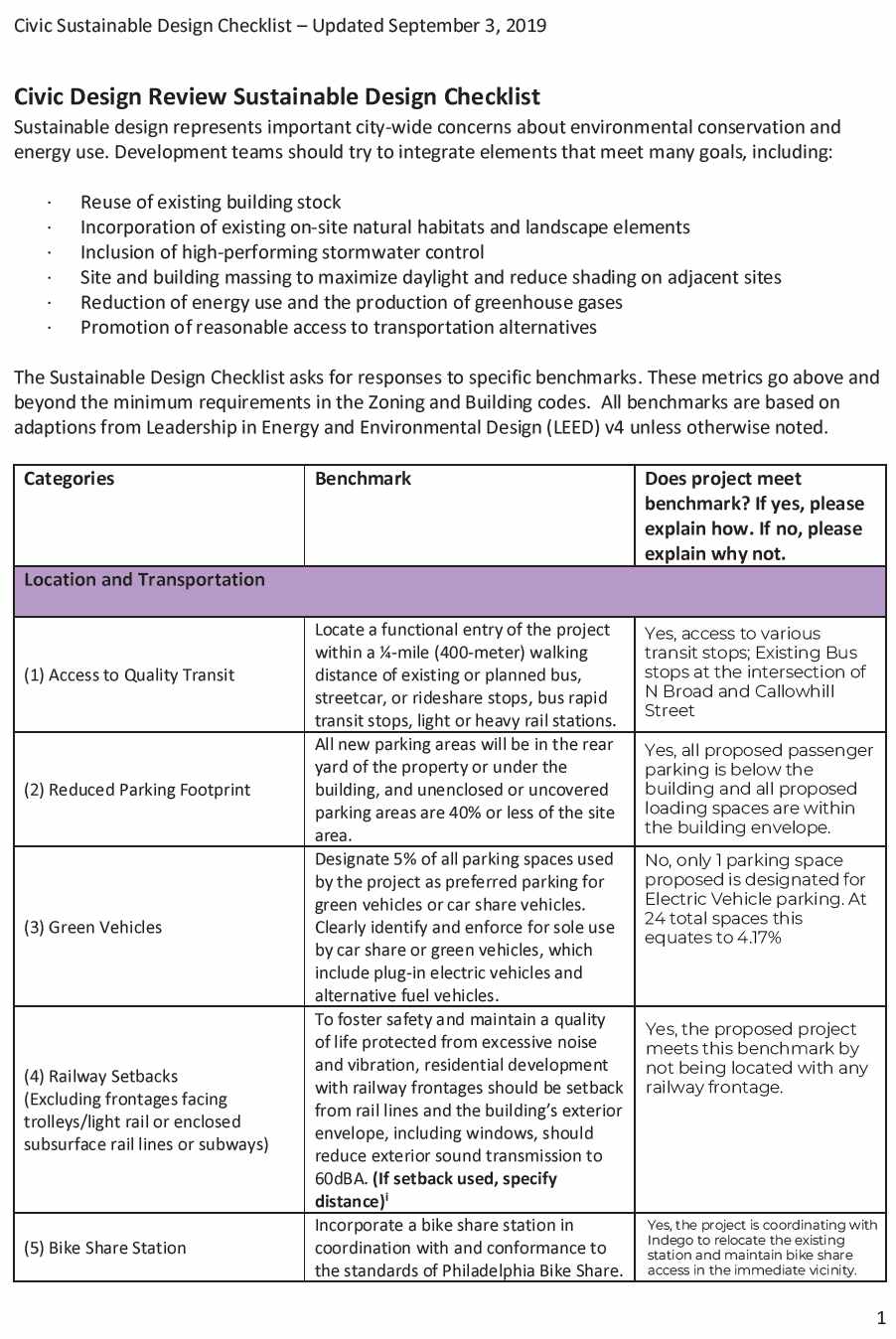
1527 Callowhill Street. Sustainable design checklist. Credit: Designblendz Architecture via the Civic Design Review by the Philadelphia City Planning Commission and the Department of Planning and Development.
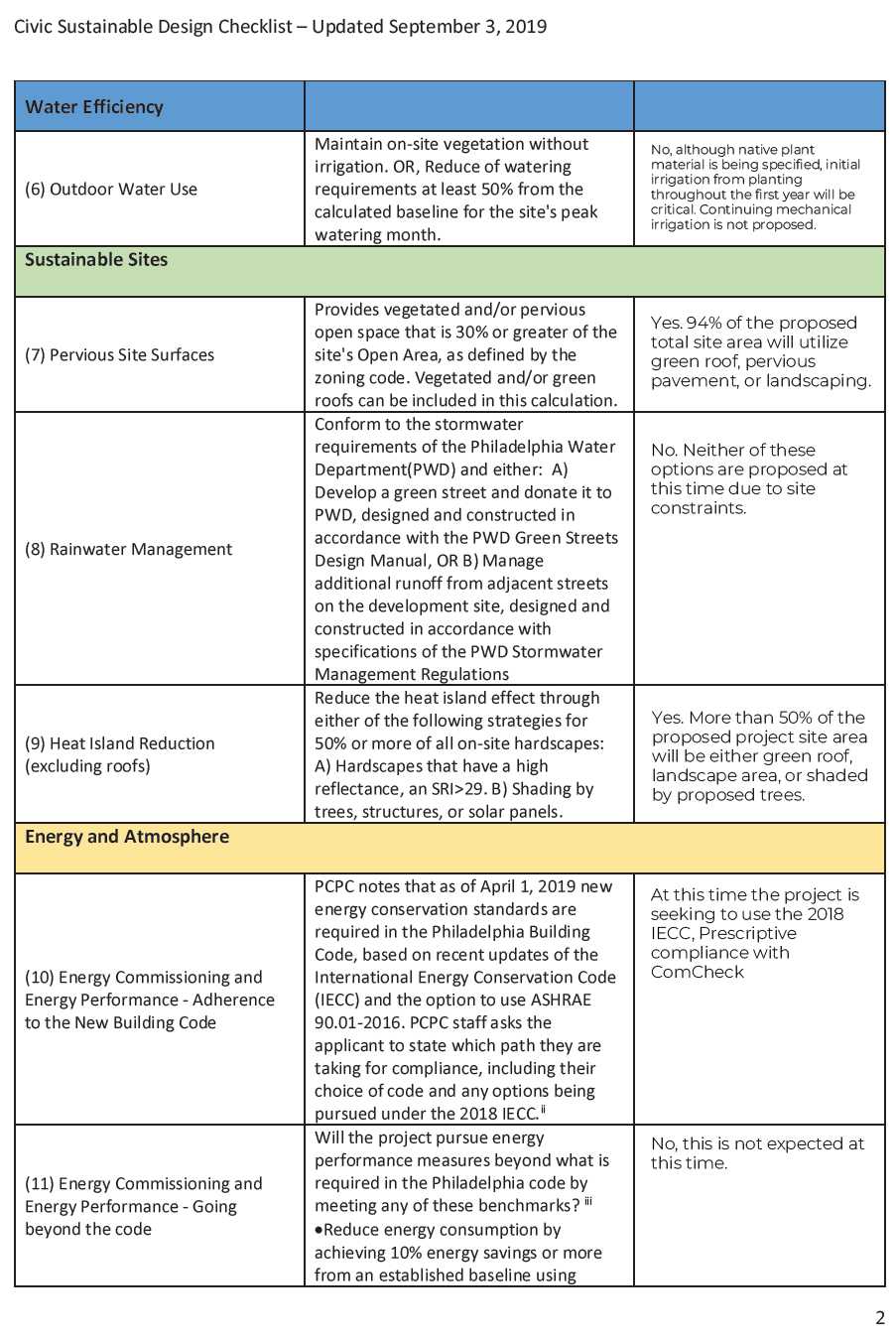
1527 Callowhill Street. Sustainable design checklist. Credit: Designblendz Architecture via the Civic Design Review by the Philadelphia City Planning Commission and the Department of Planning and Development.
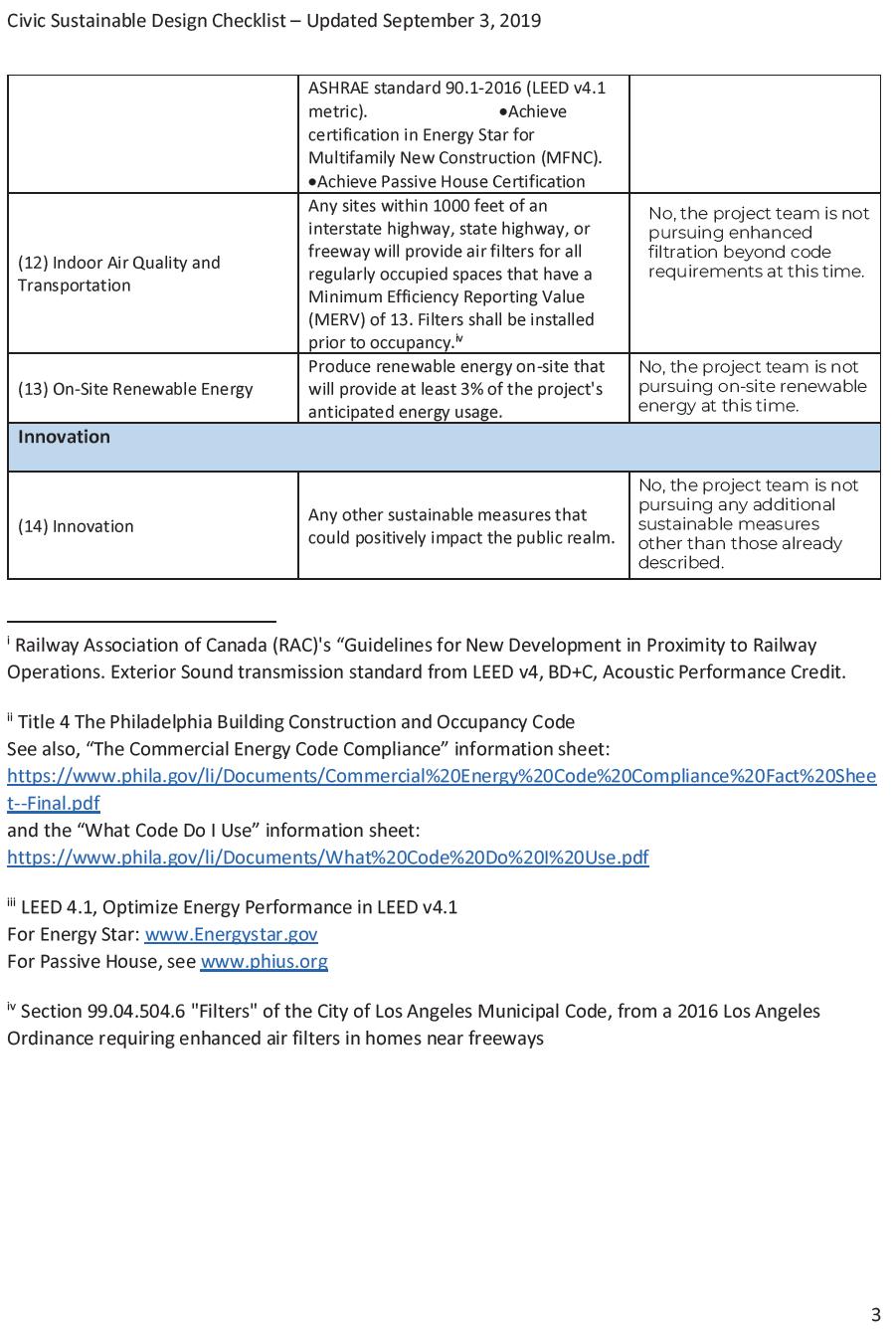
1527 Callowhill Street. Sustainable design checklist. Credit: Designblendz Architecture via the Civic Design Review by the Philadelphia City Planning Commission and the Department of Planning and Development.
Subscribe to YIMBY’s daily e-mail

Follow YIMBYgram for real-time photo updates
Like YIMBY on Facebook
Follow YIMBY’s Twitter for the latest in YIMBYnews
While a rooftop deck with expansive views is great, I also enjoy the comfort of a courtyard’s enclosure.