History

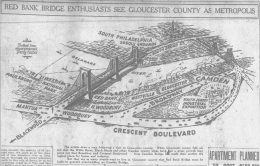
Philadelphia-Red Bank Bridge. Image via Courier Post

Looking Back at the Unbuilt Red Bank Bridge Proposal in South Philadelphia

In the 1920s, Philadelphia was on the rise, with industry and was with business activity bustling across the city. The port was generally busy, the skyline was growing, and as automobiles surged in numbers, the city was in need of bridges spanning the Delaware River and connecting to New Jersey on the other side. The proposed Philadelphia-Red Bank Bridge was brought to public attention by Mayor J. Hampton Moore, who suggested that the city is in dire need of a new bridge at its south end. The bridge would have been situated very close to the present location of the Walt Whitman Bridge, though slightly further west and running from the north to the south rather than from the west to the east.
Read More

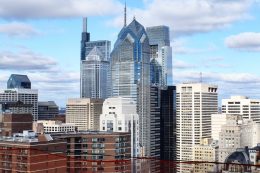
Comcast Technology Center under construction July 2016. Photo by Thomas Koloski

Observing the Comcast Technology Center After the Topping Out of the Concrete Core

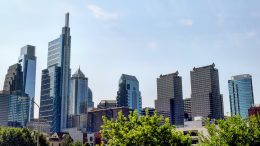
The majority of Philadelphia’s tallest skyscrapers stand in Center City to the west of City Hall, which include the Comcast Technology Center at 1800 Arch Street. The supertall, which is the tallest building in the city, has risen into the skyline between 2014 and 2017. Designed by Foster + Partners, the tower’s structure is compromised of a central concrete core surrounded with a steel frame, with the facade mostly clad in glass and metal. The tower was developed by Liberty Property Trust, which collaborated with Comcast to erect their second tower in the city. In this article, Philadelphia YIMBY takes a look back to when the Comcast Technology Center was under construction at the time when the core had just topped out.

Read More

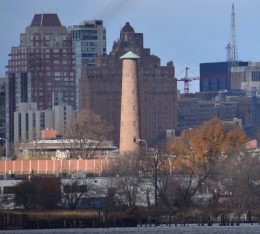
Sparks Shot Tower from Camden. Photo by Thomas Koloski

A Look at the Sparks Shot Tower, Built in 1808 in Queen Village, South Philadelphia

Philadelphia features numerous old structures with interesting styles of architecture. One of the city’s oldest tall structures is the Sparks Shot Tower, which started construction in 1807 and was completed on July 4, 1808 at 129-131 Carpenter Street in the neighborhood now known as Queen Village in South Philadelphia. The facility, which predates the Civil War by almost 60 years, was designed by Thomas Sparks and John Bishop, who originated the idea for shot towers. The 143-foot-tall structure, which forms a brick-clad cylinder that tapers to the top, still stands to this day.

Read More

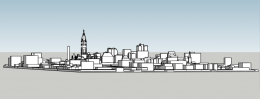
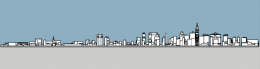
Philadelphia skyline 1905 looking southwest. Photo by Thomas Koloski

Philadelphia YIMBY Presents Massing Renderings of the 1905 Skyline

In the early 1900s, construction has just finished at Philadelphia City Hall (completed in 1901), with the clock tower dominating Center City. The skyline was not yet filled with massive towers. Instead, low- and mid-rise buildings made up the urban landscape. At the time, the city was growing rapidly, and a new generation of notable buildings was completed by the turn of the 20th century, including City Hall and the Masonic Temple. Today Philly YIMBY presents massing renderings of the Philadelphia skyline as it appeared all the way back in 1905.

Read More

Commerce Square in the Philadelphia skyline. Photo by Thomas Koloski

A Look at Commerce Square, Philadelphia’s Twin Towers

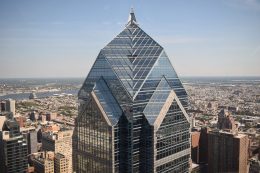
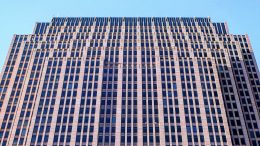
Philadelphia is home to many skyscrapers designed by well-known architects from around the world. Among these are the twin towers of Commerce Square, which were designed by the renowned firm of I.M. Pei & Partners. The 565-foot-tall One Commerce Square and Two Commerce Square towers are still prominent on the Philadelphia skyline to this day, and they take up an entire city block at 2001 Market Street and 2005 Market Street in Center City. Both of the 41-story structures are framed in steel, and each is topped with a decorative diamond on the east and west faces. Maguire Thomas Partners was the developer of the towers at the time of the completion of One Commerce Square in 1987 and five years when Two Commerce Square was completed, which was also the time when the developers decided to split their partnership.

Read More

Fetching more...